
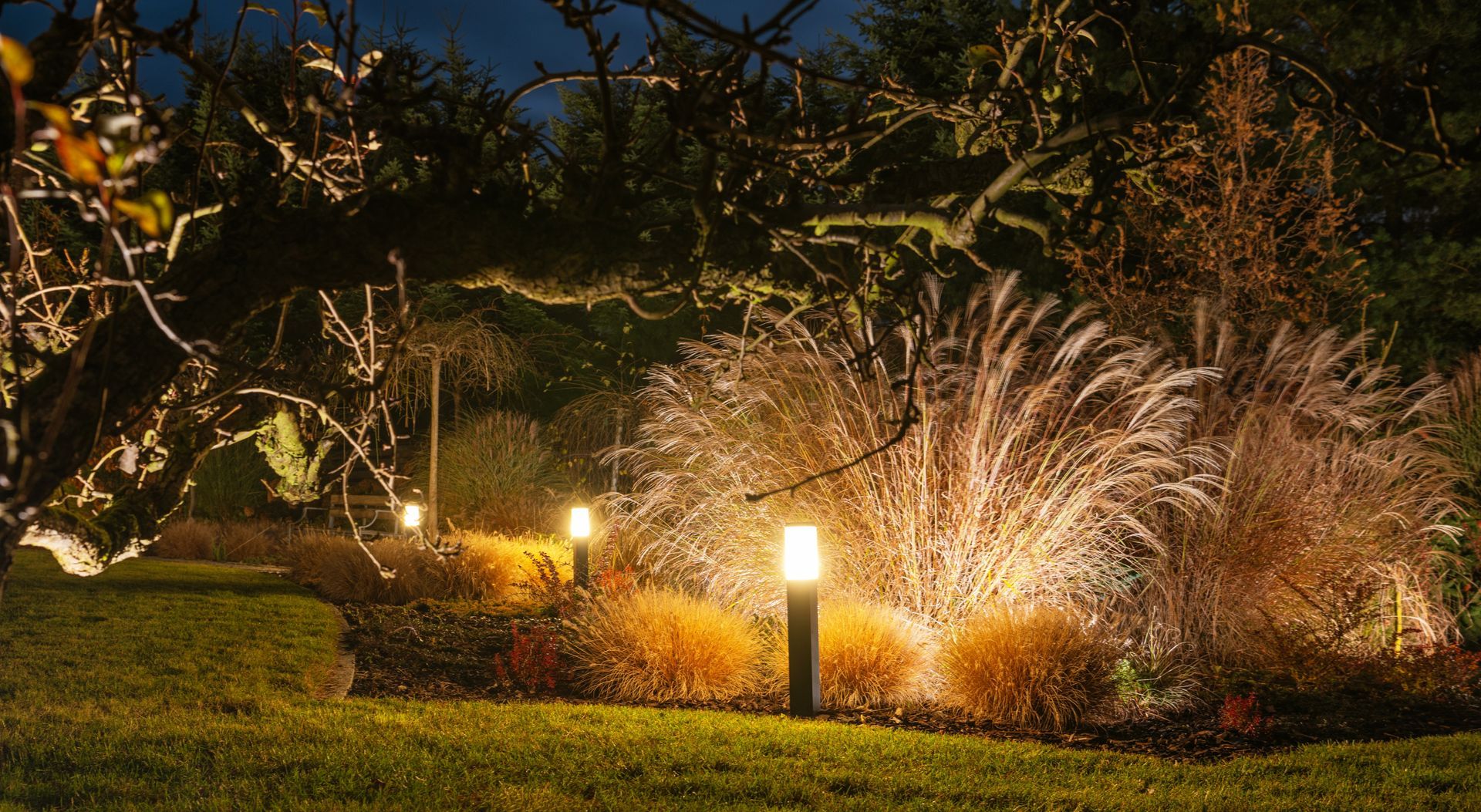
Outdoor Spaces That Remain Functional After Dark
Landscape Lighting Installation in Orange City for properties where insufficient outdoor lighting leaves pathways, plantings, and gathering areas unusable or visually undefined at night
Fixture placement determines whether a lighting installation looks intentional or improvised. Beginning with where light lands—on a specimen plant, along a walkway edge, or across an architectural feature—and working backward to fixture type, mounting height, and cable routing produces results that align with how the outdoor space is actually used after dark. Weller LawnCare LLC plans and installs landscape lighting for properties in Orange City where outdoor areas that function well during daylight hours become effectively unusable once the sun sets, either because pathways are unsafe to navigate or because the landscape itself disappears into darkness rather than contributing to the property's appearance from the street or gathering areas. Central Florida's outdoor living seasons are long, and a property that supports outdoor use only while daylight is available loses a significant portion of its functional hours.
Planning a lighting layout requires evaluating the existing landscape features that are worth highlighting, the path routes that require safe illumination, and the fixtures or mounting conditions that will hold up in Florida's combination of high humidity, seasonal storm exposure, and UV intensity. Fixtures rated for outdoor use in mild climates can fail ahead of schedule in Orange City's conditions if they aren't rated for the specific exposure level their placement creates—a path fixture installed in a low spot that floods briefly after summer storms faces different durability demands than one mounted at grade level in a consistently dry area. Energy-efficient LED systems are also evaluated for color temperature at the planning stage, because warm versus cool output significantly affects how plants and hardscape surfaces appear once lit.
Schedule a lighting design consultation to walk the property after dark and identify where fixture placement would produce the most functional and visual improvement..
What You Notice Once the Lighting System Is Finished
Installation involves more than setting fixtures in the ground—cable routing decisions, transformer sizing, and zone grouping all affect how the system performs and how easy it is to adjust or expand in the future. A transformer that's sized exactly to current load with no capacity headroom limits adding fixtures later without replacing the transformer entirely, which is a common planning shortfall on systems that were installed without accounting for future landscape additions. Fixtures are positioned to illuminate the intended feature without producing glare toward viewing areas or neighboring properties, which requires testing each zone at night before the installation is finalized rather than setting angles during daylight based on estimated output.
After the system is operational, the property reads very differently from the street and from within outdoor gathering areas—specimen plants that went visually unnoticed after sunset become defined elements, walkways that required careful navigation in darkness are clearly marked, and the transition between indoor and outdoor space at the home's entry feels continuous rather than interrupted. Weller LawnCare LLC integrates lighting placement with the existing plant layout so fixtures aren't positioned in locations that will be obstructed as plants mature, which is a detail that separates installations planned around the landscape from those that treat lighting and planting as independent systems.
Lighting zones can be grouped to allow independent control of pathway lighting, accent lighting, and area lighting, which gives the property flexibility for different times of evening or levels of outdoor activity. Timer and photocell controls are factored into the installation plan so the system operates consistently without requiring manual switching—particularly relevant during Orange City's longer summer days when sunset timing shifts across the season.
Common Questions About This Service
Landscape lighting questions typically focus on fixture durability, planning process, and how the system handles Orange City's outdoor conditions. The following addresses what property owners ask most before and during the installation process.
What fixture rating is appropriate for Florida's outdoor conditions?
Fixtures installed in Orange City should carry an IP65 or higher ingress protection rating at minimum, which indicates resistance to the water exposure and humidity that accelerate corrosion and electrical failure in lower-rated equipment used in the same outdoor positions.
How is fixture placement determined during the planning phase?
Placement decisions are made by evaluating each landscape feature for its visual interest when lit, the angle that produces shadow depth rather than flat illumination, and the cable path that gets power to the fixture without surface-routed wire that creates tripping hazards or maintenance complications.
Why does color temperature affect how plants and hardscape look at night?
Warm white output in the 2700–3000 Kelvin range brings out the green and brown tones in plant material and warm-toned pavers naturally, while cooler temperatures above 4000K shift those colors toward gray or blue tones that can make the landscape appear clinical rather than inviting—this decision is reviewed at the planning stage before fixtures are ordered.
How does the system hold up during Central Florida's summer storm season?
Properly installed low-voltage landscape lighting with weather-rated fixtures and sealed connections at the transformer and splice points handles standard rainfall without issue, but fixtures installed in areas with persistent standing water after storms are positioned or elevated to avoid prolonged submersion that damages internal components over multiple seasons.
When should additional zones be added to an existing lighting system?
Adding zones is considered when new landscape features are installed, when coverage gaps become apparent after seasonal plant growth changes how existing fixtures perform, or when outdoor gathering areas are added—Weller LawnCare LLC sizes transformers at initial installation with capacity headroom to accommodate future additions without requiring a full system replacement.
Weller LawnCare LLC designs lighting systems around how the property is actually used and what features are worth making visible after dark, starting with an on-site evaluation of the existing landscape. Call (407) 314-7121 to arrange a consultation and begin planning a lighting layout suited to your property's specific features and outdoor use patterns.