
Lawn Coverage That Skips the Waiting Period
Sod Installation in Orange City for bare lawns, patchy grass coverage, and properties needing established turf quickly
Bare soil, patchy coverage, and lawns that never recovered from drought stress or pest damage are the conditions that make sod installation the practical choice over seeding. Weller LawnCare LLC handles sod installation in Orange City for homeowners who need established lawn coverage without the months-long establishment window that seeded grass requires in Florida's variable rainfall environment. The difference between a sod-installed lawn and a seeded one is visible within weeks—sod arrives with an established root mat that knits into prepared soil rather than germinating from scratch.
Site preparation determines how well sod roots into the ground below it. Grading removes high and low spots that create uneven surfaces and water pooling—both common issues in Orange City's flat, sandy terrain. Once the surface is graded and existing debris is cleared, sod is laid in offset rows with tight seams to minimize gaps where weeds can establish before the turf fills in. Turf variety selection matters in Central Florida: St. Augustine performs well in many residential applications here due to its tolerance of Florida's heat and humidity, but properties with significant shade, high foot traffic, or specific drainage patterns may call for a different species.
Request a sod installation estimate based on your property's current lawn condition and square footage..
What You Notice Once Sod Installation Is Finished
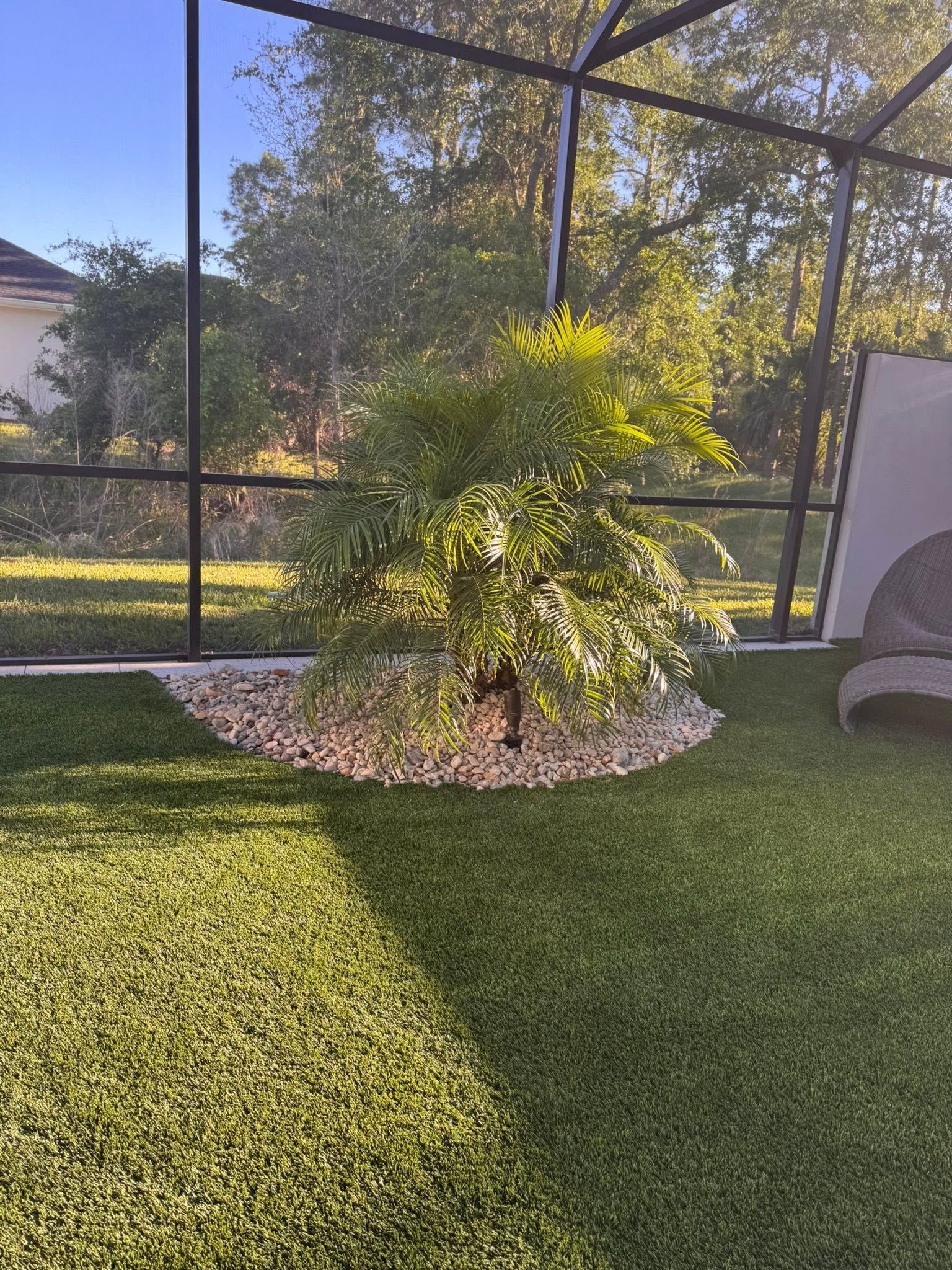
Sod installation produces visible results on the day of installation—bare and patchy areas are replaced with uniform green coverage, and the lawn has an immediately usable surface rather than a fragile seedbed. The initial establishment period requires consistent watering on a schedule suited to Central Florida's heat, which differs by season: newly laid sod during Florida's dry winter months needs more frequent irrigation than sod installed during the summer rainy season when natural rainfall supplements watering.
After the root system knits into the soil below—typically detectable by gently tugging a corner of a sod piece to check for resistance—the lawn behaves as an established turf rather than newly laid material. You'll notice the surface feels firm and consistent underfoot, edges where sod pieces meet become invisible as the turf fills the seams, and the lawn holds its color without the spotty yellowing that often signals failed seed germination.
Projects that include grading work prior to sod placement require that phase to be completed and settled before installation proceeds, which affects overall project timing. Weller LawnCare LLC accounts for existing irrigation coverage when planning sod placement—areas outside sprinkler reach need supplemental watering access during establishment, and that's identified during the pre-installation evaluation rather than after sod is already down.
Questions Before Starting Your Sod Project
Homeowners in Orange City frequently have questions about turf selection, watering requirements, and what to expect during the first weeks after sod is installed.
How does grading affect sod installation outcomes?
Low spots that aren't corrected before installation become areas where water pools on top of the sod rather than draining through it, which can prevent proper rooting and cause sections to fail during establishment.
What turf varieties are commonly used for Orange City residential lawns?
St. Augustine grass is widely used in Central Florida residential applications for its heat tolerance and shade performance, while Zoysia and Bermuda are alternatives for high-traffic or full-sun areas where a denser, more wear-resistant turf is needed.
Why is watering frequency so important immediately after installation?
Newly laid sod has a shallow root mat that dries out faster than established turf—consistent watering during the first two to three weeks is what allows roots to penetrate the soil below rather than staying at the surface.
When can the lawn be used normally after sod is installed?
Light foot traffic is generally possible within a few weeks once the sod shows firm root resistance when tested, but heavy use should wait until the turf is fully knitted to avoid disrupting root establishment.
How does Central Florida's seasonal rainfall affect sod installation timing?
Sod installed during the summer rainy season benefits from consistent natural rainfall that reduces the irrigation burden during establishment, while installations during Florida's dry season require a more managed watering schedule.
Weller LawnCare LLC can evaluate your current lawn conditions and provide a detailed sod installation estimate—call (407) 314-7121 to get the process started.