
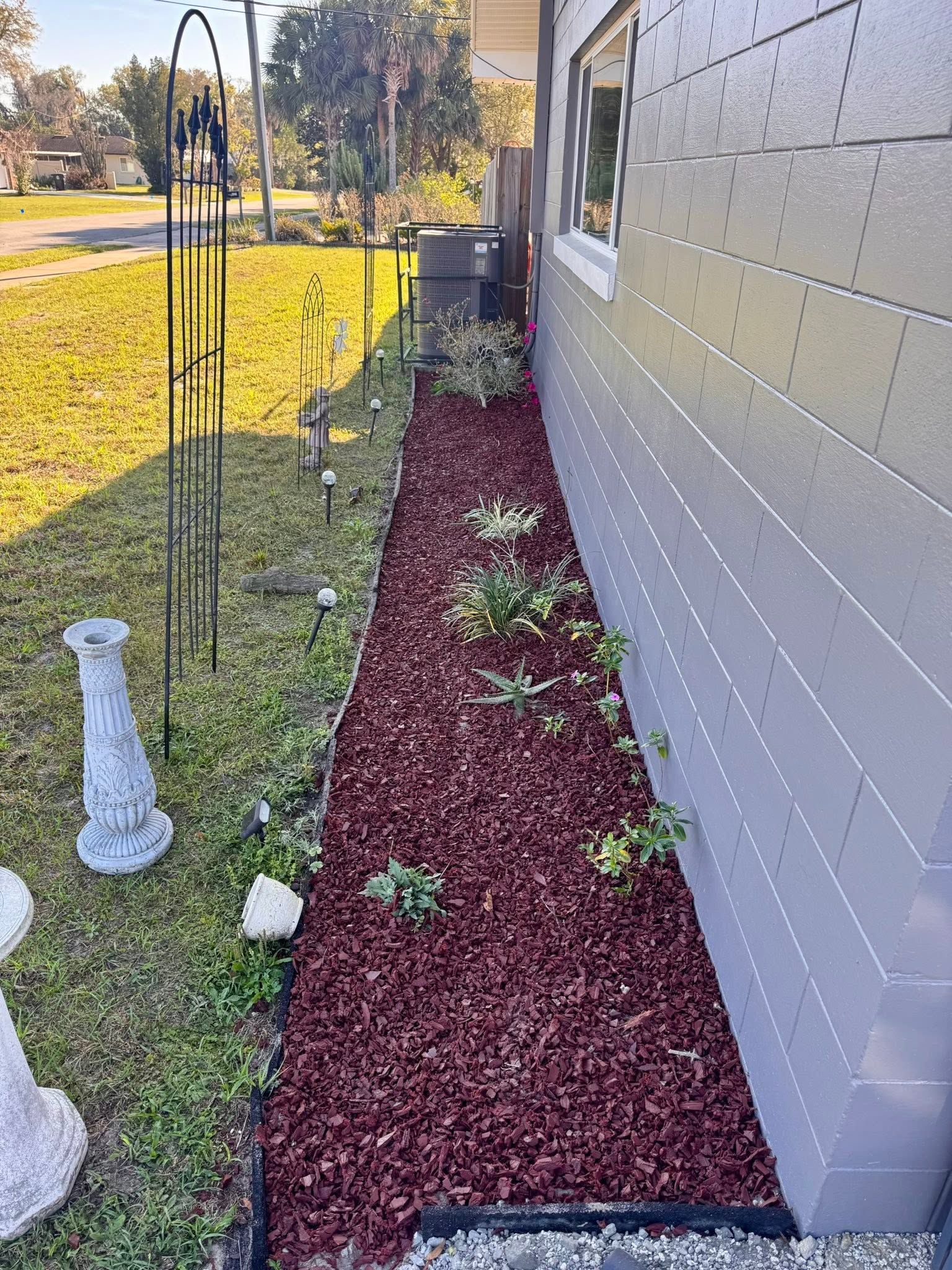
Landscape Beds That Stay Clean and Defined
Mulch and Decorative Rock Installation in Orange City for planting beds losing definition, moisture, or a finished appearance
Mulch breaks down, migrates, and fades—and in Central Florida's combination of intense sun and heavy summer rainfall, that process happens faster than in most other climates. The same rainfall that washes exposed soil also displaces lightweight mulch from beds on even modest grades, leaving root zones uncovered between service visits. Weller LawnCare LLC installs mulch and decorative rock in Orange City for homeowners whose landscape beds have lost their definition, their coverage, or their ability to retain soil moisture through the dry season.
The practical difference between mulch and decorative rock comes down to what each material accomplishes over time. Organic mulch—shredded hardwood and eucalyptus are common choices in Florida—decomposes into the soil, adding organic matter and improving the moisture-retention characteristics of the sandy substrate typical in this region. Decorative rock does not break down, making it a lower-maintenance surface option in beds where ongoing replenishment isn't desirable, though it retains heat and drains differently than organic material, which affects plant performance in those beds.
Request a landscape bed refresh estimate to see what material and coverage options fit your property's specific beds and plant types.
The Difference Between Prepared Beds and Surface Coverage Alone
Proper installation begins with bed preparation rather than simply spreading material over existing ground. Edge lines are re-cut or reinforced, existing organic material is assessed for depth and decomposition level, and any weed growth is cleared before new material goes down. Applying fresh mulch over a compacted, weed-filled base produces a different long-term result than installing over a properly prepared bed—the coverage looks similar immediately after installation, but the difference in how the bed performs and holds its appearance over the following months is significant.
After installation, you'll notice that bed edges have crisp, defined lines separating planting areas from lawn, plants sit within clearly bounded spaces rather than blending into surrounding grass, and the surface of the bed looks uniform in color and depth. In practical terms, soil beneath a properly mulched bed retains moisture longer between rain events, which reduces the watering demand on plants during Orange City's dry season months.
Material depth matters as much as material selection: mulch installed at less than two inches provides minimal moisture benefit, while installations exceeding four inches can restrict airflow to root zones in some plant types. Weller LawnCare LLC accounts for existing bed conditions and plant types when determining appropriate material depth rather than applying a single standard across all beds on a property. Decorative rock installations also factor in drainage—rock placed over beds without adequate slope can redirect water toward structures rather than away from them..
Common Questions About Mulch and Rock Installation
The questions below address what Orange City homeowners typically want to know about material selection, installation depth, and how mulch and rock interact with their existing landscape beds.
How often does mulch need to be replenished in Central Florida?
Organic mulch in Florida's climate breaks down faster than in cooler regions—most landscape beds benefit from replenishment once per year, with the timing often aligned with the start of the dry season when moisture retention becomes most important.
Why does bed preparation matter before new mulch or rock is installed?
Skipping edge re-cutting and weed removal before installation means the new material covers existing problems rather than correcting them, and weeds growing through fresh mulch typically re-establish faster than in a properly cleared bed.
What factors determine whether mulch or decorative rock is the better choice for a specific bed?
Plant type, bed drainage, desired maintenance frequency, and sun exposure all affect which material performs better—rock retains more heat than mulch, which influences plant health in fully sun-exposed beds during Florida's summer months.
How does mulch depth affect moisture retention in sandy Florida soils?
A two-to-three inch layer of organic mulch meaningfully slows evaporation from the sandy soil common in Orange City, whereas a thin layer disperses too quickly to maintain consistent coverage through the dry season.
What are the drainage considerations for decorative rock in landscape beds?
Rock does not absorb water the way organic mulch does, so beds with rock coverage need appropriate grade and drainage planning to prevent water from pooling at plant root zones or redirecting toward building foundations.
Weller LawnCare LLC can assess your current bed conditions and recommend the right materials and installation approach for your landscape—call (407) 314-7121 to arrange an on-site review of your beds.