
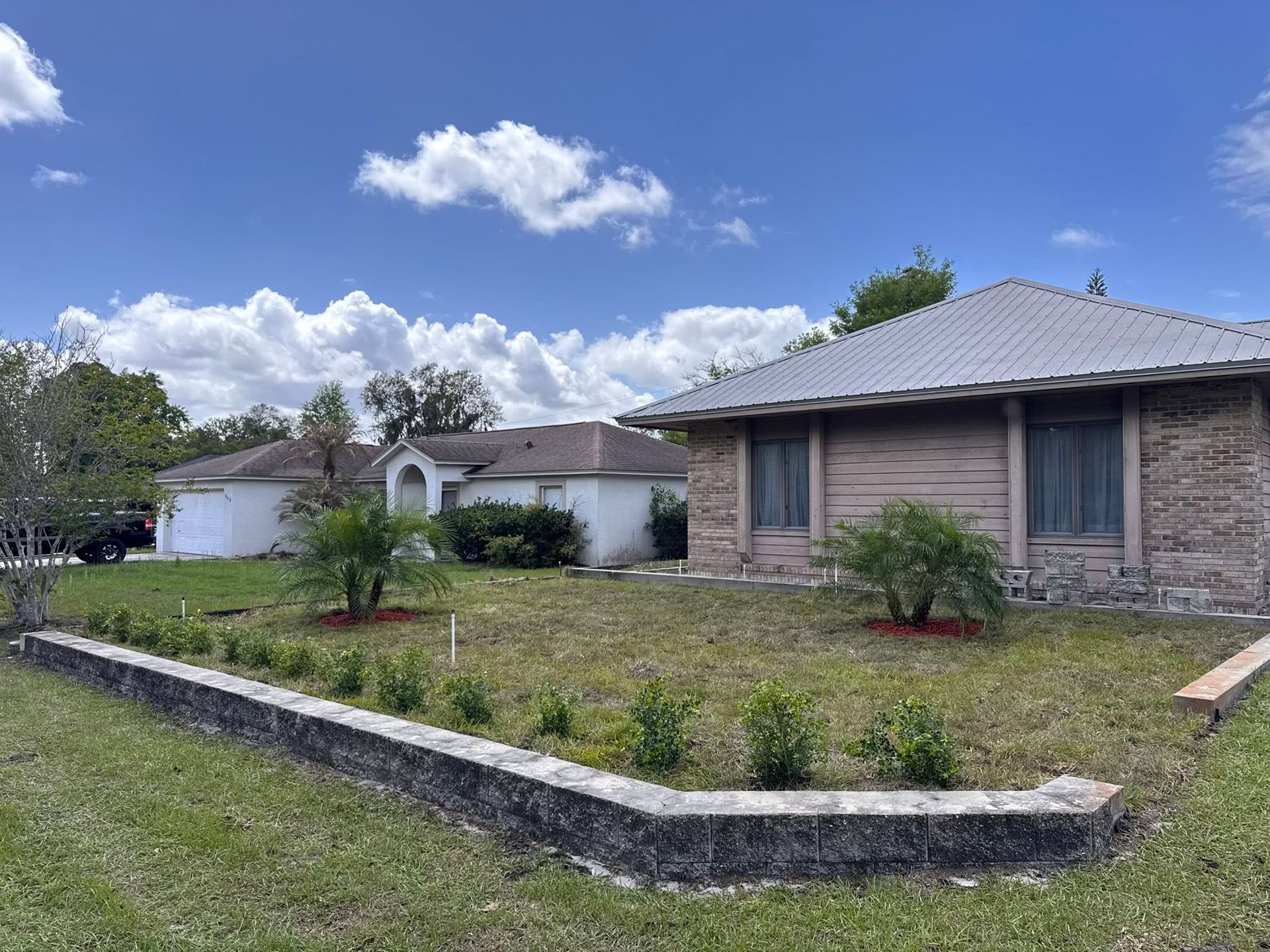
Slopes and Soil That Stay Where They Belong
Retaining Walls in Orange City for elevation changes, erosion-prone slopes, and landscapes losing soil after heavy rainfall
Central Florida's intense seasonal rainfall creates a specific erosion pattern on properties with any meaningful grade change: water moves fast across sandy soil, undercutting mulch beds, depositing sediment across paved surfaces, and gradually lowering the elevation of sloped areas. Retaining walls interrupt that cycle by creating a physical structure that holds soil in place at defined elevations. Weller LawnCare LLC builds retaining walls in Orange City for homeowners dealing with visible erosion, collapsing landscape beds, or property grades that make outdoor areas difficult to use.
Before any wall is built, the site needs evaluation for drainage load, soil type, and the forces the wall will need to resist. A wall that handles surface erosion requires a different construction approach than one supporting a significant grade change with soil weight pressing behind it. In Central Florida, drainage considerations are particularly critical—walls without adequate drainage provisions can experience hydrostatic pressure buildup after heavy rain, which accelerates failure regardless of how well the face of the wall is constructed.
Request a retaining wall assessment to have your property's specific grade conditions and drainage patterns reviewed before planning begins..
How Retaining Walls Address Erosion and Grade Problems
Wall construction involves excavating to a stable footing depth, setting a compacted base course, and building upward with materials selected for the wall's height and load requirements. Common wall materials include segmental concrete block, natural boulders, and timber—each suited to different aesthetic goals and structural demands. Segmental block systems with interlocking profiles handle the combination of load and moisture exposure common in Florida landscapes without the deterioration that timber experiences in consistently wet conditions.
Once a retaining wall is completed, the changes are immediately visible and functional: soil stays at its intended elevation, planting beds maintain their depth and shape, and surfaces below the wall stop accumulating deposited sediment after rain events. Landscape areas that were previously sloped and difficult to maintain become flat, defined spaces that hold mulch and plants in place through the wet season.
Wall height and batter angle—the slight backward lean built into taller walls—depend on what the wall needs to retain and the soil conditions behind it. Weller LawnCare LLC evaluates those factors during the site assessment phase rather than applying a single construction approach across different property conditions. Projects also consider how the wall integrates visually with surrounding landscaping so the finished structure functions as part of the landscape rather than an isolated construction element..
What Property Owners Usually Ask About Retaining Walls
The questions below reflect what Orange City homeowners typically want to understand before committing to a retaining wall project.
Why does drainage matter so much in retaining wall construction?
Water that collects behind a wall with no escape path creates hydrostatic pressure that can bow or topple even a well-built wall—gravel backfill and weep holes or drainage pipe are standard provisions that relieve that pressure in Florida's high-rainfall environment.
What materials are typically used for residential retaining walls?
Segmental concrete block, natural stone, and boulders are common for residential applications in this region, each offering different aesthetics and structural properties depending on wall height and soil load.
How is the site evaluated before a wall is designed or built?
The assessment covers the grade change being addressed, soil type, what's on top of the slope, existing drainage patterns, and any irrigation or utility lines that affect where the wall can be positioned.
When does a retaining wall require professional construction rather than a simple DIY approach?
Walls taller than two feet or walls retaining slopes with significant soil weight above them involve structural forces that require appropriate footing depth and material selection to stay stable over time.
How do retaining walls interact with existing lawn and landscaping in Orange City?
A well-planned wall works with existing irrigation zones and plant placements rather than cutting through them, which is part of the site evaluation done before design is finalized.
Weller LawnCare LLC can evaluate your property's specific slope and drainage conditions and outline what a retaining wall solution would involve—contact us by phone at (407) 314-7121 to schedule your assessment.